
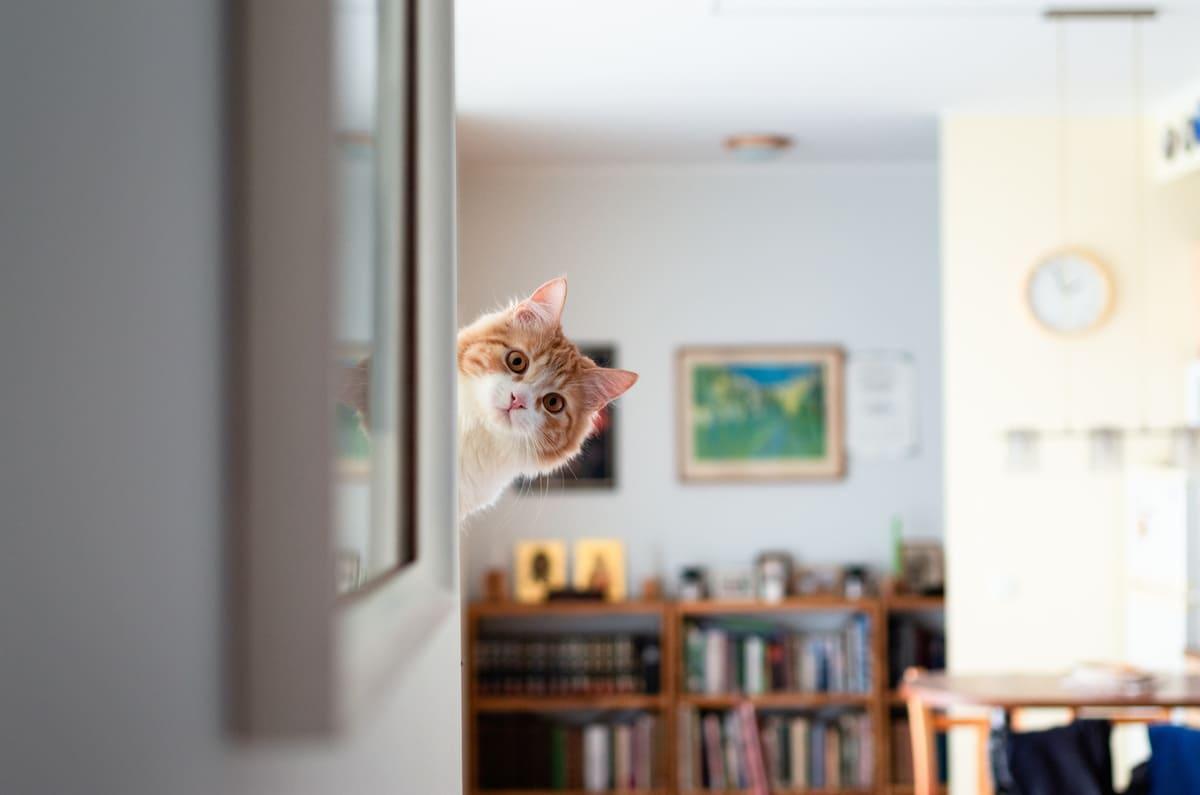
Understanding why your cat is afraid of visitors is the first step toward creating an environment where they feel safe and calm. Cats are creatures of habit, and the arrival of strangers can disrupt their emotional balance.
In this article, we will explain the reasons behind this fear, the signs that indicate your cat is scared, and, most importantly, how you can help them overcome this stress. Preparing your home, understanding their body language, and providing a sanctuary are key to making them feel protected.
Why are some cats afraid of strangers?
Fear of unknown people is a common reaction in cats, rooted in their survival instinct. Unlike dogs, which tend to be more social, cats are territorial and prefer the security of their familiar surroundings. The arrival of a stranger represents an intrusion into their territory, which can cause anxiety and fear. Cats feel safest when they have control over their environment and know what to expect.
Early socialization plays an important role. Cats exposed to different people and situations during their first weeks of life tend to be more confident. Conversely, those raised in an isolated environment may be more prone to showing fear.
For these animals, a predictable and clean environment equals security, and that includes keeping their litter box spotless with options like our Sanicat Active White Unscented Clumping Litter or Sanicat Classic Lavender Litter, which contribute to their overall well-being by reducing sources of stress.
Signs that your cat is afraid or feels insecure
Not all cats manifest fear in the same way, but some signs are universal. A fearful cat may hide under the bed, behind the sofa, or anywhere they feel safe. They may also appear tense, with a hunched body, ears pinned back, and tail tucked between their legs.
In addition to these physical signs, you might also observe changes in their behavior. A frightened cat may stop eating, use the litter box in inappropriate places, or become aggressive. It is important not to force your cat to interact with visitors if they show signs of fear, as this will only increase their anxiety.
What are cats afraid of inside the house?
Loud noises, such as vacuum cleaners, storms, or fireworks, are a common source of stress. Cats have very sensitive hearing and can perceive sounds that humans cannot hear. Changes in the environment, such as redecorating, a new piece of furniture, or even a change in the location of their litter box, can disorient them and make them feel insecure. Some cats may also be afraid of specific objects, like balloons, plastic bags, or even certain types of toys.
Additionally, the presence of other animals, especially if they are not well-socialized, can cause stress and fear. A cat that feels threatened by another animal in the house may become withdrawn, aggressive, or anxious.
How to prepare your home when visitors arrive?
Preparation is key to minimizing your cat's stress. Before guests arrive, make sure your cat has access to a safe sanctuary where they can retreat if they feel overwhelmed. This refuge could be a quiet room, a cardboard box, or a carrier covered with a blanket. Ensure they have food, water, and their litter box available in this space.
To make their sanctuary even more comfortable, it is important that their litter box is impeccable. Our Sanicat Marseille Soap Clumping Litter helps maintain odor control, contributing to a clean and safe environment.
During the visit, ask your guests to avoid approaching the cat if the cat shows no interest in interacting. Explain that it is important to respect their space and not force them out of their hiding spot. If your cat is curious and approaches the guests, allow them to interact gently, by offering a treat or a toy. However, if they show signs of fear, it is best for guests to step back and give them space.
What to do if your cat hides or avoids contact?
If your cat is afraid and hides during visits, the most important thing is to respect their decision and not force them out. Forcing them will only increase their anxiety and reinforce their negative association with strangers. Instead, you can try to gently entice them by offering a treat or a toy near their hiding spot. If they approach, let them take it and retreat again. The goal is for them to associate the presence of visitors with something positive, like a reward.
You can also try creating a more relaxed environment using feline pheromone diffusers. These products release synthetic pheromones that mimic those cats use to mark their territory and feel safe. Diffusers can help reduce your cat's stress, making them feel more comfortable.
When to consult a veterinarian or feline behaviorist?
In most cases, fear of visitors is a normal reaction that can be managed with patience. However, in some situations, the fear can be so intense that it affects your cat's quality of life. If your cat shows signs of severe fear, such as aggression, excessive vocalization, loss of appetite, or eliminating outside the litter box, it is important to consult a veterinarian or feline behaviorist (ethologist).
A feline behaviorist, as an animal behavior specialist, can help you identify the causes and develop a personalized treatment plan. Treatment may include behavior modification techniques, such as desensitization and counter-conditioning. Do not hesitate to seek professional help if you feel your cat is afraid of people and it is affecting their well-being.